
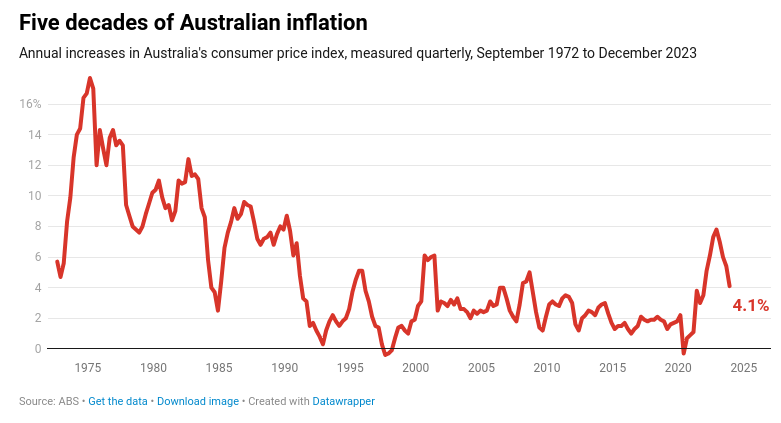
Australia’s inflation rate recently dropped to 2.7%, its lowest level in three years, marking a potential turning point for the housing market. As inflation eases, the Reserve Bank of Australia (RBA) may face less pressure to keep interest rates high. While no immediate rate cuts are expected, economists predict potential reductions in 2024. A decline in inflation could mean more affordable mortgage rates in the future, spurring increased demand in the property market.
Key Impacts on the Real Estate Market:
- Potential Interest Rate Relief: If inflation remains within the RBA’s target range (2-3%), it could lead to future rate cuts. Lower interest rates make mortgages more affordable, encouraging homebuyers and investors to re-enter the market. A more favorable borrowing environment may stimulate demand, especially from first-time buyers and investors looking for better deals.
- Increased Housing Affordability: With the decline in inflation, the purchasing power of consumers is likely to improve. Homebuyers may find it easier to manage their mortgage repayments if interest rates stabilize or drop in 2024. This could make homes more accessible to a wider range of buyers, boosting activity in the real estate market.
- Stabilization of Property Prices: The easing inflation may help stabilize property prices, particularly after the dramatic price rises witnessed during the recent high inflation period. Lower inflation could help keep property prices in check, creating a more balanced market where buyers and sellers find it easier to negotiate.
- Boost in Consumer Confidence: Falling inflation often leads to increased consumer confidence. As inflation eases, consumers are likely to feel more secure about their financial future. This, combined with the possibility of lower mortgage costs, can give a boost to the housing market as more buyers consider entering or upgrading their homes.
- Investment Opportunities: For property investors, lower inflation can be a positive signal. With the potential for interest rate cuts on the horizon, the cost of borrowing could decrease, allowing investors to expand their portfolios. Additionally, rental demand might increase as inflationary pressures on household budgets ease.
Caution Still Required
Despite the encouraging inflation figures, it’s important for borrowers and investors to remain cautious. The RBA may take a conservative approach and hold rates steady for a few more months before implementing any reductions. Additionally, external global economic factors could still pose challenges to the Australian economy, affecting how quickly any monetary policy adjustments are made.
 English
  Chinese